
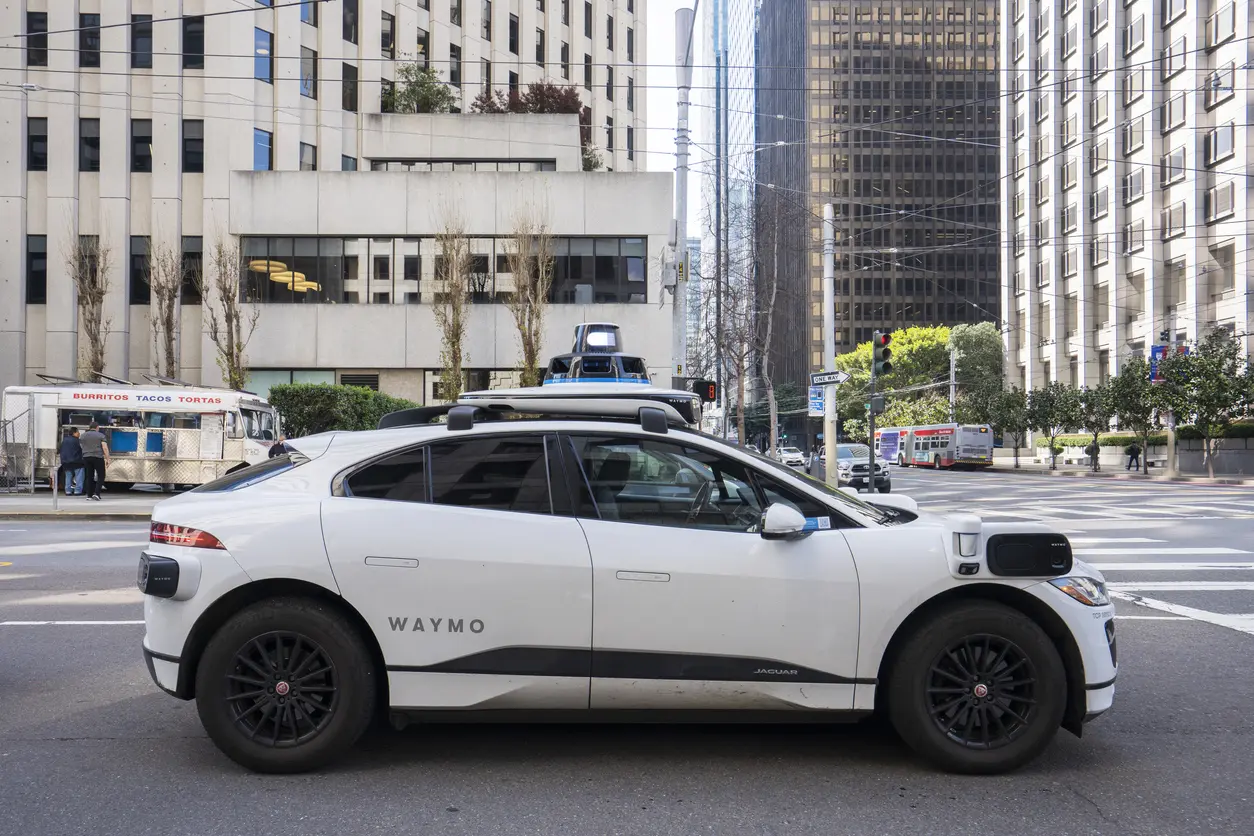
Robotaxis are on their way to Canada. In mid-October, U.S.-based Waymo announced it was about to land in Toronto with the goal of launching a fleet of driverless vehicles available for on-demand ride-hailing services by 2028.
Waymo, a subsidiary of Alphabet Inc., Google's parent company, said Torontonians should soon expect to see their company’s vehicles on local streets as part of “a rigorous, phased, safety-first approach starting with high-definition mapping of local street networks and testing with trained autonomous specialists behind the wheel.”
“Expanding into Canada marks an important milestone in Waymo’s global journey,” said co-CEO Tekedra Mawakana. “Toronto is one of the world’s great cities — innovative, diverse, and forward-looking. We’re proud to bring the Waymo Driver to Canada’s largest city and to partner with the vibrant business, arts and cultural communities that share our commitment to safer streets and more accessible mobility.”
The company has been approved to participate in the Ontario government’s Automated Vehicle Pilot Program, which allows testing of automated vehicles (AVs) on provincial roads under strict conditions.
Launched Eight Years Ago.
Waymo introduced the United States’ first commercial robotaxi service in 2018 and now operates in multiple cities across the country. Recently, the company announced it had secured $5 billion in financing as it looks to expand operations domestically and internationally.
Safety is a major selling point of automated vehicles. According to Waymo, its fleet has logged more than 400 million fully autonomous kilometres and has been involved in “95 per cent fewer crashes involving serious injury or worse compared to humans in the cities where we operate.”
Proponents say AVs eliminate human error, the leading cause of collisions. The company states that its vehicles have been involved in 93 per cent fewer pedestrian crashes with injuries, 86 per cent fewer cyclist collisions with injuries and 82 per cent fewer motorcycle accidents with injuries compared to traditional driver-operated vehicles.
The Pros and Cons.
Safety is just one of the pluses of AVs. Robotaxis provide an additional mode of transportation for those who don’t drive and, because they are not reliant on human drivers, they potentially provide a cost savings for consumers over traditional ride-share options.
An autonomous vehicle does not rely on a driver who can get tired and is therefore able to operate 24/7. And because there is no driver, the potential for an impaired, distracted or irritable operator is eliminated.
Waymo utilizes electric vehicles (EVs), which can lower greenhouse gas emissions compared to traditional gas-powered cars. The fleet is also programmed to obey speed limits, stop signs and to adhere to defensive driving patterns.
On the downside, establishing an autonomous vehicle system requires a massive capital infusion. The AV industry also threatens millions of traditional driving jobs, including cabbies and truckers. Other criticisms include:
- Weather conditions, such as snow, ice, heavy rain or fog, along with unpredictable road conditions, such as flooding or construction, can negatively impact robotaxis in different ways than a vehicle driven by a human operator.
- Empty robotaxis may circle or travel between drop-off points and next pickups, potentially increasing traffic congestion.
- The vehicles have also experienced glitches that leave them stalled, potentially blocking emergency vehicles at critical times.
Robotaxis vs. the Great White North.
Simply stated, autonomous vehicles combine physical sensors, powerful computers and artificial intelligence to assess surroundings, plan safe routes and control the car's movement.
Waymo got its start in Phoenix, Arizona, a warm-weather climate, and operates in places such as Miami, Florida and Los Angeles, California. However, the company must acclimatize to Toronto, which will soon return to winter, bringing snow, slush and ice, all of which could have a significant impact on an autonomous vehicle’s sensor hardware.
"All the sensors can get occluded by snow, which is something that they don't have in California,” Sidney Givigi, a professor of robotics and machine learning at Queen’s University’s School of Computing, told CBC News. "What if there is ice on the road, or you have a very strong blizzard and then you try to stop your car on a hill and it does not stop?"
Waymo counters that they have “been advancing our system in some of the snowiest conditions across the country —regularly driving in Upstate New York, Michigan's Upper Peninsula, and the Sierra,” amassing tens of thousands of miles in diverse, snowy environments.
“Life doesn't freeze when winter comes – if anything, that's when riders need reliable transportation most, when being exposed to the elements becomes less appealing,” the company states. “Today, the Waymo Driver successfully navigates rain, fog, sandstorms, and freezing temperatures. As we expand to more cities across the U.S. and globally, we're applying the same systematic, scientific approach that enabled us to validate the Waymo Driver for these conditions to advance our capabilities for snowier, winter weather.”
While Canadian weather may present a challenge, it should be noted that Waymo has until 2028 to find solutions before the expected official launch of a Toronto fleet.
Weighing the Practical Concerns.
Technology fundamentally moves quicker than regulation. While innovations can strike rapidly, legislation is typically reactive and slowed by bureaucratic processes. Over the coming years, federal and provincial governments will be called on to assess the benefits and risks of autonomous ride-hailing systems and introduce any rules needed to serve the common good.
For example, critics say the addition of robotaxis will ultimately result in more vehicles on our roadways. It is argued that these cars may not maneuver as efficiently as human drivers, creating mobility issues. In that case, do we need laws to limit the number of AVs?
Perhaps of greater concern is how insurance claims will be litigated. The Insurance Bureau of Canada (IBC) notes that “with automated vehicles starting to come to Canada’s roads, there’s a need to update provincial insurance laws to ensure that people injured in collisions involving these vehicles can be compensated in a fair and timely manner.”
According to the IBC, federal vehicle safety standards will also require changes “to reflect the greater reliance on technology in operating these vehicles.”
“Currently, auto insurance policies prescribed in provincial laws are built on the notion that human error is the primary cause of motor vehicle collisions,” the Bureau states. “But, as humans cede control of driving to automated technology, collisions may be caused by product malfunction.”
The ramifications of this can be significant for those injured in a motor vehicle accident with an autonomous vehicle since a claimant would foreseeably be forced to seek compensation through product liability litigation.
“Product liability litigation is more complex and takes years longer to resolve than traditional motor vehicle liability claims,” according to the Bureau. “The longer wait will delay compensation for many people who use automated vehicles or who are injured in a collision involving an automated vehicle.”
Additionally, while AVs may be involved in fewer accidents, repairing a self-driving car can be far more expensive depending on the damage because of its specialized hardware. If you are at fault in a collision with an autonomous vehicle, how will your insurance rates be impacted?
We Are Here to Help.
The law is complex and ever-evolving. That is why you need knowledgeable, experienced legal help if you have been injured due to someone else’s negligence and our personal injury lawyers will handle your personal injury claim.
For more than 60 years, Gluckstein Lawyers has been committed to putting our clients first. Our trusted team of car accident lawyers has extensive experience at trial and around the negotiating table.
Expertise.
Share
Subscribe to our Newsletter