
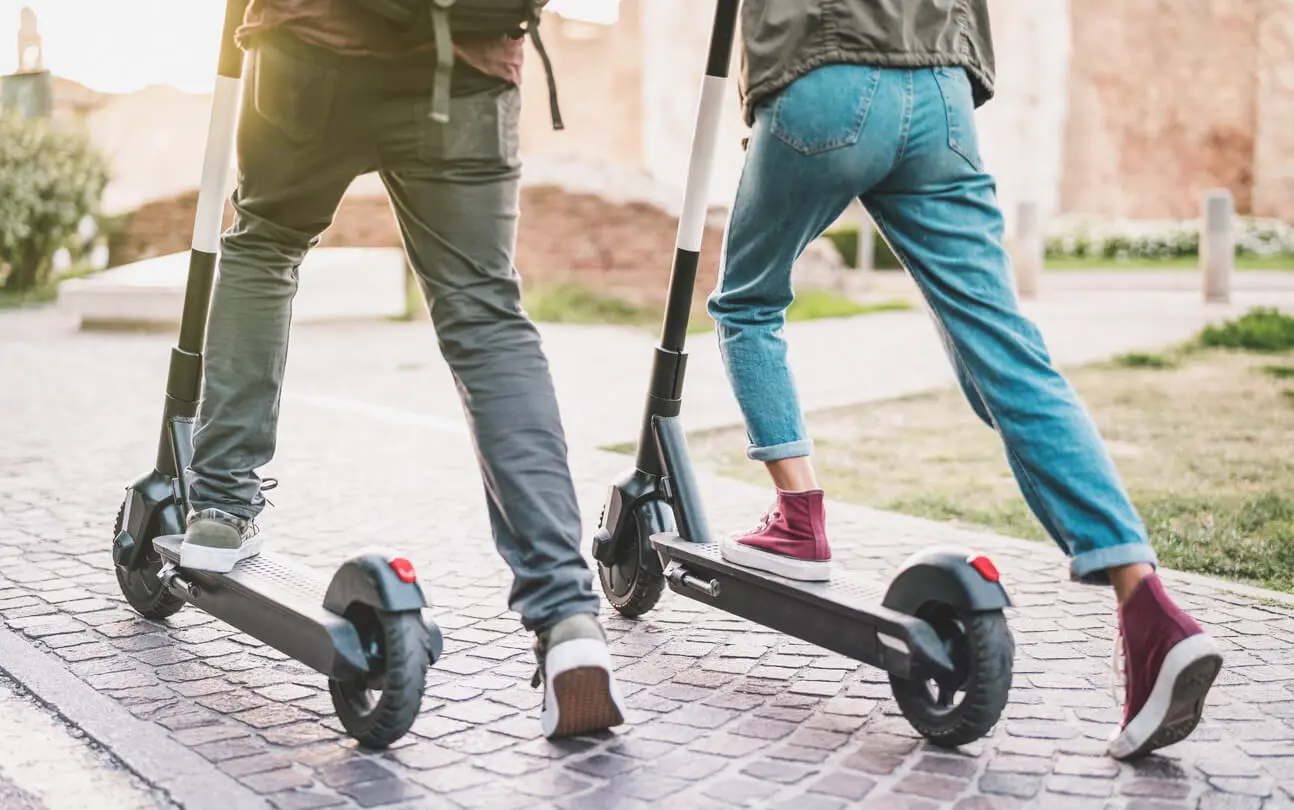
It is easy to understand the appeal of e-bikes. As a viable transportation alternative to the automobile, they are a convenient, eco-friendly way of getting around while offering significant monetary savings. They are relatively inexpensive, costing anywhere from a few hundred dollars to several thousand dollars. Riding an e-bike is also fun.
Unlike a traditional bicycle, which relies solely on pedal power, e-bike motors remove traditional "pain points" of cycling, such as distance and inclines.
“Riding an e-bike can be significantly more fun than riding a conventional bicycle with the ability to travel faster and to explore more places,” according to the Canadian Coalition for Green Health Care. “The feeling of riding an e-bike can be quite exhilarating. It can turn everyday commutes or going to the store into an adventure. Even a leisurely ride becomes a lot more fun with the feeling of the freedom an e-bike gives you.”
Injuries ‘Have Been Doubling Every Year.’
Hospital and safety advocates have cautioned that these trends reflect not only increased adoption but also regulatory and enforcement gaps surrounding emerging micromobility devices. However, e-bikes, along with e-scooters, have come under increased scrutiny due to safety concerns. St. Michael’s Hospital in Toronto noted that the number of trauma cases it treated due to e-bike mishaps jumped from 15 to 51, or an increase of 240 per cent, between 2020 and 2024, while e-scooter injuries rose from four to 28.
“The number of people injured by e-bikes and e-scooters across Canada has been doubling every year,” according to the hospital. “The injuries ranged from minor scrapes to open fractures and traumatic brain and spinal cord injuries. Hospital admissions involving injured riders and pedestrians are on the rise everywhere each year.”
And all ages are affected. The Hospital for Sick Children (SickKids) reported seeing more children and youth injured as a result of the use of e-scooters and e-bicycles.
“E-scooters and other similar devices can be attractive to children who may view them as toys or youth who use them for transportation,” says Dr. Suzanne Beno, Medical Co-Director of the Trauma Program and Emergency Physician at SickKids. “We are seeing a notable increase in patients presenting to the Emergency Department with significant injuries from e-scooter use this season; high speed, a lack of helmet use, young age and interaction with motor vehicles all place children and youth at risk of serious injury if there is a fall or collision.”
E-Bikes and the Law.
In most places in Canada, Ontario included, riders do not need a license, registration or insurance for an e-bike as long as it meets specific power-assisted bicycle criteria. Essentially, a bike with a motor of 500W or less with a top speed of 32 km/h, and functional pedals are permitted on most roads and highways where conventional bicycles are allowed.
Municipalities also have their own bylaws. For example, under Toronto’s municipal bylaws, all bicycles, whether powered by people or batteries, are prohibited on sidewalks. The only exception is children 14 and under if their bike has wheels under 61 centimetres. There is a $60 fine for riding a bicycle or e-bike on a sidewalk.
Typically, to operate an e-bike in Canada, you must be at least 16 years old, wear an approved bicycle or motorcycle helmet and adhere to traffic laws. It is also illegal to modify the motor to increase power or speed beyond 32 km/h.
It is advisable to check with your municipality to ensure you are following the rules of the road when operating an e-bike or electric scooter.
Calls to Close Regulatory Gaps.
In recent years, there has been an increased concern that the e-bike boom has outpaced existing safety laws, along with calls to close regulatory gaps at the municipal, provincial and federal levels.
One of the concerns about e-bikes is their use on sidewalks, which is generally prohibited under municipal bylaws. However, it doesn’t stop some riders from doing it. Late last year, Toronto City Councillor Jon Burnside proposed that police confiscate electric mobility devices if they are ridden on sidewalks.
In a CBC report, Burnside noted “more enforcement power is needed to reinforce the messaging as the number of injuries is increasing.”
"They have the potential to go quite quickly and hurt people seriously," he said of the devices. "I think we need to be taking this more seriously than we have been."
In Mississauga earlier this year, one councillor suggested formally requesting the Ontario government to implement a provincial licensing and registration framework for e-bikes and e-scooters.
A motion, which failed in council, sought to have the province amend the Highway Traffic Act (HTA) to treat the devices like motor vehicles rather than bicycles.
However, the council noted that Ontario’s Safer Roads and Communities Act would amend the HTA to overhaul e-bike regulations. This Act has received Royal Assent, and introduces regulation-making powers that would allow the province to re-classify and more tightly regulate e-bikes through future regulations that have not yet been proclaimed. According to the Ontario government, the Act “would create regulation-making powers…that would allow e-bikes to be categorized into distinct classes, with each class having prescribed operator and vehicle safety requirements.”
A study released by the Canadian Automobile Association (CAA) last summer revealed “gaps in safety regulations, data collection, and public awareness.”
“Electric bicycles and scooters … have significantly transformed urban mobility in the past decade by offering convenient, eco-friendly and affordable alternatives to traditional motor vehicles,” the report noted. “However, along with benefits, such micromobility alternatives also present some new challenges for urban planning and road safety.
“This has prompted growing public concern about their use and safety. In light of the increasing prevalence of these devices on local roads, often in urban centres, it is timely to more closely examine their role in facilitating the mobility of Canadians,” the CAA added. “At the same time, it is essential to increase awareness of their impact on roads shared with other types of road users, as well as increase understanding of the risks they pose and ways those risks can be mitigated.”
Seek Experienced Legal Advice After an E-Bike Accident.
Different legal avenues may be available if you have been injured in an e-bike accident. For example, if you are struck by a car while riding an e-bike, you may be able to pursue a claim through the driver’s automobile insurance.
However, because e-bike operators are not required to have insurance, circumstances change if, for example, a pedestrian has been injured by one of these vehicles. In such cases, you would generally not be entitled to statutory accident benefits under Ontario’s Insurance Act. Instead, these e-bike accidents would generally be treated similarly to personal injury claims involving traditional bicycles.
You can still file a claim against a negligent e-bike rider, but you would have to sue the operator personally rather than pursue benefits through Ontario’s no-fault system. In these cases, you might be able to seek recovery from the rider’s homeowner or tenant liability insurance if they are covered or file a direct claim against the operator.
Personal injury law is complex, and there are deadlines that may affect your claim, so it is imperative to act quickly. The experienced team of personal injury lawyers at Gluckstein Lawyers will explain your options and what you may be entitled to in your initial consultation.
Contact our e-bike accident lawyers today to learn how we can help if you have been injured in an e-bike accident or e-scooter accident.
If you're not sure where to start, we make it simple. You can schedule a free consultation with us at no cost, and we will listen to your story. We also work on a contingency fee basis, so you pay nothing unless we win your case.
Our firm has been recognized with numerous awards for the work we do for injured clients and their families. We invite you to read stories from past clients and hear, in their own words, how we stood by them. For over 60 years, our firm has represented injury victims, and that commitment has only grown since.